

Hey there! I'm a supplier of HDI Rigid - Flex PCBs, and today I'm super stoked to break down how these nifty pieces of tech work. So, buckle up and let's dive right in!
First off, what the heck is an HDI Rigid - Flex PCB? Well, it's a hybrid circuit board that combines the best of both worlds: the rigidity of a traditional printed circuit board (PCB) and the flexibility of a flexible printed circuit (FPC). This unique combo makes it a go - to choice for a whole bunch of applications where space is tight and design flexibility is key.
The Basics of HDI Rigid - Flex PCBs
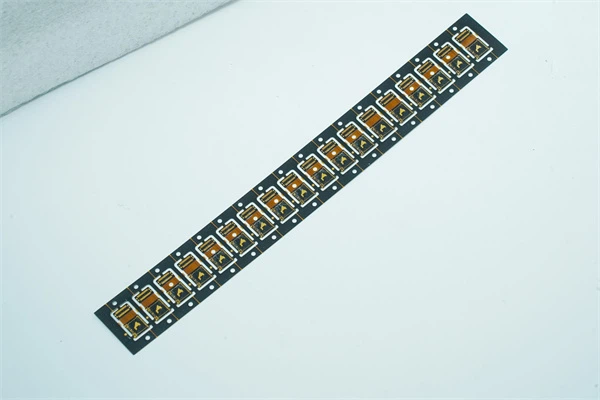
Let's start with the structure. An HDI Rigid - Flex PCB is made up of multiple layers of rigid and flexible materials. The rigid parts are usually made of fiberglass - based materials like FR - 4, which provide stability and support for components. On the other hand, the flexible sections are crafted from materials such as polyimide, which can bend and twist without breaking.
The high - density interconnect (HDI) aspect comes into play with the way the traces and vias are designed. HDI technology allows for smaller vias and finer traces, which means more components can be packed onto the board in a smaller space. This is crucial for modern electronics, where devices are getting smaller and more powerful all the time.
How Signals Travel on HDI Rigid - Flex PCBs
Now, let's talk about how signals move around on these boards. Signals are the lifeblood of any electronic device, and HDI Rigid - Flex PCBs are designed to ensure they travel smoothly and efficiently.
The traces on the board act as highways for electrical signals. These traces are like little wires that connect different components together. In an HDI Rigid - Flex PCB, the traces are carefully routed to minimize interference and signal loss. The flexible sections of the board can be bent and shaped to fit the specific design requirements of the device, allowing for creative and space - saving layouts.
Vias are another important part of the signal - routing process. Vias are small holes that connect different layers of the PCB. In HDI technology, microvias are often used. These are much smaller than traditional vias, which not only saves space but also reduces the distance that signals have to travel between layers. This results in faster signal transmission and better overall performance.
Manufacturing Process of HDI Rigid - Flex PCBs
The manufacturing of HDI Rigid - Flex PCBs is a complex and precise process. It starts with the design phase, where engineers use specialized software to create the layout of the board. They carefully plan the placement of components, traces, and vias to ensure optimal performance.
Once the design is finalized, the manufacturing process begins. First, the rigid and flexible materials are prepared separately. The rigid layers are laminated together, and the flexible layers are created using a process called photolithography. This involves exposing a photosensitive material to light to create the desired pattern of traces.
After the individual layers are made, they are stacked and bonded together. This is a critical step, as any misalignment or air bubbles can cause problems with the board's performance. Once the layers are bonded, the vias are drilled and plated to create the electrical connections between the layers.
Finally, the board goes through a series of testing and inspection processes to ensure that it meets the required specifications. This includes electrical testing to check for signal integrity and visual inspection to look for any physical defects.
Applications of HDI Rigid - Flex PCBs
HDI Rigid - Flex PCBs are used in a wide range of industries. In the consumer electronics sector, they are found in smartphones, tablets, and wearables. These devices require a high level of miniaturization and flexibility, which HDI Rigid - Flex PCBs can provide.
In the automotive industry, HDI Rigid - Flex PCBs are used in various applications, such as in - car entertainment systems, advanced driver - assistance systems (ADAS), and electric vehicle battery management systems. The ability to bend and flex allows these boards to fit into tight spaces within the vehicle, while the high - density interconnect technology enables the integration of multiple functions on a single board.
The aerospace and defense industries also rely on HDI Rigid - Flex PCBs. These applications demand high reliability and performance in harsh environments. The flexibility of the boards allows them to withstand vibrations and shocks, while the HDI technology ensures that the boards can handle high - speed signals and complex functions.
Different Types of HDI Rigid - Flex PCBs
There are several types of HDI Rigid - Flex PCBs available, each with its own unique features and applications. For example, the Flying Tail Structure Rigid - Flex PCB is designed with a flexible "tail" that can be easily connected to other components. This type of board is often used in applications where a detachable or movable connection is required.
The Multilayer Flexible Rigid - Flex PCB features multiple layers of flexible and rigid materials, which allows for even more complex designs and higher component density. These boards are commonly used in high - end electronics where space is extremely limited.
Another type is the Multilayer FPC, which is a flexible printed circuit with multiple layers. While not strictly a rigid - flex PCB, it is often used in conjunction with rigid boards to create a hybrid solution.
Why Choose Our HDI Rigid - Flex PCBs
As a supplier of HDI Rigid - Flex PCBs, we take pride in offering high - quality products that meet the needs of our customers. Our boards are manufactured using the latest technology and strict quality control measures to ensure reliability and performance.
We have a team of experienced engineers who can work closely with you to design and develop custom HDI Rigid - Flex PCBs that are tailored to your specific requirements. Whether you need a board for a consumer electronics device, an automotive application, or an aerospace project, we've got you covered.

Our commitment to customer satisfaction means that we offer competitive pricing, fast turnaround times, and excellent after - sales support. We understand that in the fast - paced world of electronics, time is of the essence, and we strive to get your products to you as quickly as possible.
Let's Connect!
If you're in the market for HDI Rigid - Flex PCBs, I'd love to hear from you. Whether you're just starting to explore your options or you have a specific project in mind, we can have a chat and see how we can work together. Don't hesitate to reach out for a quote or to discuss your requirements in more detail. Let's make your next electronics project a success!
References
- Printed Circuit Board Handbook, by Clyde Coombs Jr.
- High - Density Interconnect (HDI) Technology, various industry whitepapers.