

Ceramic PCB
Your Professional Ceramic PCB Manufacturer!
Shenzhen Tontek Circuits Co., Ltd, one of China's leading printed circuit board (PCB) manufacturers, was founded in 2006. The company has established core product advantages in high-density interconnect (HDI) PCBs, any-layer HDI PCBs, multilayer PCBs, high-frequency PCBs, high-speed PCBs, RF antenna PCBs, and ultra-fast storage SSDs.
-
![Aluminum Nitride Ceramic PCB]() Aluminum Nitride Ceramic PCBAluminum Nitride Ceramic PCB is an advanced electronic packaging material that uses aluminum nitride (AlN) ceramic as the substrate material. It employs aluminum nitride ceramic as an insulating...read more
Aluminum Nitride Ceramic PCBAluminum Nitride Ceramic PCB is an advanced electronic packaging material that uses aluminum nitride (AlN) ceramic as the substrate material. It employs aluminum nitride ceramic as an insulating...read more -
![Alumina Ceramic PCB]() Alumina Ceramic PCBAlumina Ceramic PCB is a special type of circuit board that uses aluminum oxide (Al₂O₃) ceramic as the substrate material. It employs high-purity alumina ceramic as the base and forms conductive...read more
Alumina Ceramic PCBAlumina Ceramic PCB is a special type of circuit board that uses aluminum oxide (Al₂O₃) ceramic as the substrate material. It employs high-purity alumina ceramic as the base and forms conductive...read more -
![3D Ceramic Packaging Substrate]() 3D Ceramic Packaging SubstrateA 3D ceramic substrate is an advanced packaging base material made from high-performance ceramics (e.g., Al2O3, AlN, LTCC) that enables three-dimensional circuit integration. It provides superior...read more
3D Ceramic Packaging SubstrateA 3D ceramic substrate is an advanced packaging base material made from high-performance ceramics (e.g., Al2O3, AlN, LTCC) that enables three-dimensional circuit integration. It provides superior...read more -
![TEC Semiconductor Thermoelectric Refrigeration Chip]() TEC Semiconductor Thermoelectric Refrigeration ChipA Thermoelectric Cooler (TEC), also known as a Peltier cooler, is a solid-state heat pump that utilizes the Peltier effect to transfer heat between two surfaces when an electric current is...read more
TEC Semiconductor Thermoelectric Refrigeration ChipA Thermoelectric Cooler (TEC), also known as a Peltier cooler, is a solid-state heat pump that utilizes the Peltier effect to transfer heat between two surfaces when an electric current is...read more -
![Thick Film Integrated Circuit]() Thick Film Integrated CircuitA Thick-Film Integrated Circuit (IC) is a type of hybrid microelectronics technology where circuit elements (such as resistors, conductors, and dielectrics) are fabricated by depositing...read more
Thick Film Integrated CircuitA Thick-Film Integrated Circuit (IC) is a type of hybrid microelectronics technology where circuit elements (such as resistors, conductors, and dielectrics) are fabricated by depositing...read more -
![Sensor Module Substrate]() Sensor Module SubstrateA Sensor Module Substrate is a specialized printed circuit board (PCB) or ceramic platform that serves as the mechanical support, electrical interconnection, and environmental protection...read more
Sensor Module SubstrateA Sensor Module Substrate is a specialized printed circuit board (PCB) or ceramic platform that serves as the mechanical support, electrical interconnection, and environmental protection...read more -
![Planar LED Ceramic Submount]() Planar LED Ceramic SubmountA Planar LED Ceramic Submount is a flat, substrate-like component typically made from high thermal conductivity ceramics (such as Aluminum Oxide Al2O3 or Aluminum Nitride AlN) that serves as the...read more
Planar LED Ceramic SubmountA Planar LED Ceramic Submount is a flat, substrate-like component typically made from high thermal conductivity ceramics (such as Aluminum Oxide Al2O3 or Aluminum Nitride AlN) that serves as the...read more -
![High-Power Ceramic Packaging Substrate]() High-Power Ceramic Packaging SubstrateA High-Power Ceramic Packaging Substrate is a specialized circuit board or platform constructed from ceramic materials with high thermal conductivity (such as Aluminum Nitride - AlN, Silicon...read more
High-Power Ceramic Packaging SubstrateA High-Power Ceramic Packaging Substrate is a specialized circuit board or platform constructed from ceramic materials with high thermal conductivity (such as Aluminum Nitride - AlN, Silicon...read more


| Item | Batch Capability | Sample Capability | |
| Material Type | Ceramic | AL2O3(96%)/ALN(96%) | AL2O3(99%)/ALN(99%) |
| Thermal Conductivity | 170-200W/M·K | 200-250W/M·K | |
| Production Process | DPC/DBC | DPC/DBC | |
| Number of Layers | 2 Layer | Multi-layer | |
| Board Thickness Tolerance | ±0.075 | ±0.05mm | |
| Max. Size | 110mm ⅹ 110mm | 130mm ⅹ 180mm | |
| Mechanical Drilling | 0.15mm | 0.10mm | |
| Laser Drilling | Thickness: 0.25mm, Min. Hole: 0.08mm | Thickness: 0.25mm, Min. Hole: 0.06mm | |
| Thickness: 0.30mm, Min. Hole: 0.08mm | Thickness: 0.30mm, Min. Hole: 0.06mm | ||
| Thickness: 0.38mm, Min. Hole: 0.08mm | Thickness: 0.38mm, Min. Hole: 0.08mm | ||
| Thickness: 0.50mm, Min. Hole: 0.10mm | Thickness: 0.50mm, Min. Hole: 0.10mm | ||
| Thickness: 0.635mm, Min. Hole: 0.15mm | Thickness: 0.635mm, Min. Hole: 0.15mm | ||
| Thickness: 0.8mm, Min. Hole: 0.20mm | Thickness: 0.8mm, Min. Hole: 0.20mm | ||
| Thickness: 1.0mm, Min. Hole: 0.25mm | Thickness: 1.0mm, Min. Hole: 0.25mm | ||
| Thickness: 1.2mm, Min. Hole: 0.25mm | Thickness: 1.2mm, Min. Hole: 0.25mm | ||
| Thickness: 1.5mm, Min. Hole: 0.30mm | Thickness: 1.5mm, Min. Hole: 0.30mm | ||
| Thickness: 2.0mm, Min. Hole: 0.30mm | Thickness: 2.0mm, Min. Hole: 0.30mm | ||
| Finished Hole Size Tolerance | ±0.1mm | ±0.075mm | |
| Mechanical Hole Position Accuracy | ±2mil | ±1mil | |
| Aspect Ratio | 4:1 | 5:1 | |
| Line Width/Space | 1/3 Oz | ≥3/3mil | ≥2.5/2.5mil |
| 0.5 Oz | ≥3.5/4mil | ≥3/3mil | |
| 1 Oz | ≥4/5mil | ≥3/3.5mil | |
| 2 Oz | ≥5/7mil | ≥5/6mil | |
| Resin/Copper Plug Capability | Hole Size≥0.2mm | Hole Size≥0.15mm | |
| Solder Mask Dam/Bridge Width | 0.125mm | 0.08mm | |
| Warpage | ≤0.75mm | <0.5mm | |
| CNC | Fabrication Accuracy | 0.15mm | 0.10mm |
| Slot Size | ≥1mm | 0.5mm | |
| Commonly stocked Ceramic materials | |||
| Standard Ceramic Substrate Materials | AL2O3(Thickness) | 0.125/0.2/0.25/0.3/0.38/0.5/0.635/0.8/1.0/1.2/1.5/1.8/2.0/2.5/3.0/3.5mm | |
| ALN(Thickness) | 0.25/0.3/0.38/0.5/0.635/0.8/1.0/1.2/1.5/1.8/2.0/2.5/3.0/3.5mm | ||

Ceramic PCB is a kind of heat conducting ceramic powder and organic binder, and the heat conduction organic ceramic PCB is prepared at a thermal conductivity of 9-20W/m. In other words, ceramic PCB is a printed circuit board with ceramic base material, which is highly thermally conductive materials such as alumina, aluminum nitride, as well as beryllium oxide, which can make a quick effect on transferring heat away from hot spots and dissipating it over the whole surface.
Advantages of Ceramic PCB
High Thermal Expansion
One reason why ceramic PCB is widely used in electronic industry is that because it has high thermal coefficient expansion. The ceramic base thermal conductivity arises being quite close to silicon, while under most used connection metals at the same time. Needless to say, it can play the part of great isolators for a long time. devices.
Stability
There is a stable dielectric property because of the use of ceramic, the balance can change into a limited radio frequency loss so that increasing the applicability of electronic device. What’s more, despite the outward toughness, ceramic has natural resistance for most chemical used because of the ceramic base PCB.
Versatility
The noble metal paste can be highly unfailing conductors because of sintering technology. The use of ceramic PCB makes a effect on being high processing temperatures while there are different devices for different operating temperatures. What is interesting is the it also allows for good thermal conductivity and distribution of heat to the different position of a device.
Durability
there is a durability in the ceramic PCB fabrication process. Because of the essential properties of ceramics, specially the toughness, which can make sure that preventing your board from daily wear and tear. Because the ceramic PCB has a quite slow aging property with the consistency of based PCB, it can be changed without worry of replacement soon.
Adaptability
At last, one of the prominent advantages of ceramic PCB is that using the metal core in the engineering process. It can change to be the rigid carriers so that provides mechanical stiffness, making it easy to use between fluids and solids as the roughness and wear resistance are great, so it can be used in various industrial position
Materials of Ceramic PCB
Aluminum Oxide (Al₂O₃)
Aluminum Oxide is an inorganic compound, also known as alumina. It is an advanced material made of aluminum and oxygen. It usually appears white in color but varies depending on purity. The color can be pink to almost brown. This compound has no smell and comes in a crystalline powder form but does not dissolve in water.
Aluminum Nitride (AIN)
Aluminum nitride (AIN) is a non-oxide, semiconductor technical grade ceramic material. The structure of this compound is a hexagonal crystal, and the color is blue-white in its pure form. The aluminum nitride, a synthetic ceramic compound, is commonly white or gray in color and may also sometimes appear as a pale yellow.
Beryllium Oxide (BeO)
Beryllium Oxide (BeO) or beryllia, which was also known, historically, as glucan or glucinium oxide. As the name suggests, it is derived from beryl or the mineral bromellite. It is a solid crystalline inorganic compound that appears white in color.In addition to its great electrical insulating property, its thermal conductivity is higher than that of any other nonmetal [(209 to 330 W/(m·K)], with the diamond as the only exception, and it even surpasses that of some metals.
Application of Ceramic PCB
Memory Modules
One of the key application fields of ceramic PCBs has to do with memory modules. These PCBs have memory integrated circuits that are commonly used in the production of DDR SDRAM and other computer components related to memory. All RAM used in personal computers requires ceramic substrate PCBs with integrated memory modules.
Receiving & Transmission Modules
The production of radar technology is made possible by ceramic PCBs. The American firm Westinghouse was the first to create transmission and receiving modules using multi-layer ceramic PCBs due to their high thermal conductivity and compatible CTE. Unlike regular PCBs, ceramic circuits are the only kind that are useful in the creation of transmission modules.
Multilayer Interconnect Board
One of the key selling points of ceramic PCBs is that they have a greater capacity than regular circuit boards. In other words, ceramic PCBs can hold more components using the same amount of surface area than a conventional PCB. Therefore, ceramic PCBs have a greater number of potential applications using a multi-layer interconnect board.
Analog/Digital PCB
Various computing firms have used low-temperature ceramic circuit (LTCC) boards to create superior analog and digital boards with superior circuit tracing. Personal computer companies have utilized LTCCs to create a host of lightweight circuits that reduce the total weight of the product and minimize crosstalk interference.
Solar Panels
HTCCs and LTCCs alike are used in the manufacturing of solar panels and other photovoltaic (PV) electrical panels. PV panels utilize multilayered ceramic board technology to ensure longevity and adequate thermal conductivity.
Electric Power Transmitter
Wireless power transfer and charging modules are becoming increasingly common consumer electronics devices. These devices are constructed using ceramic PCB technology because of their unique thermal properties and heat-dissipation ceramic substrate.
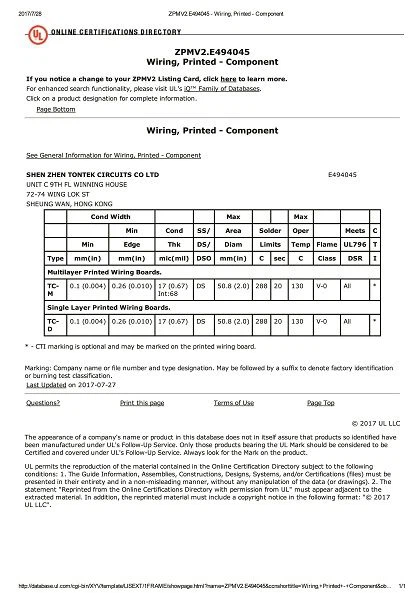
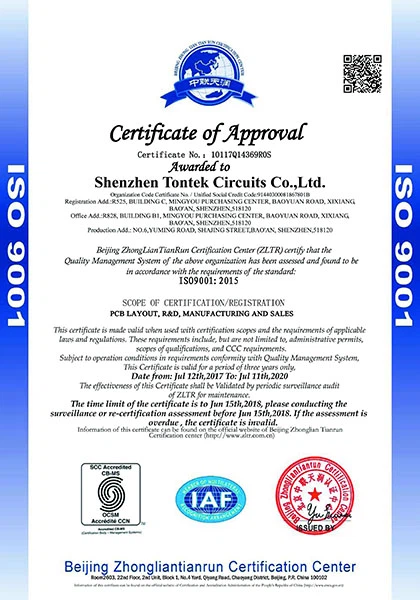
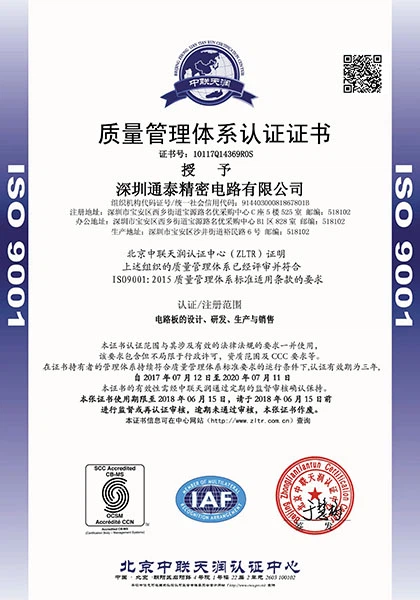
Certificate
Package & Delivery
Package: Standard export package or Custom
Delivery: By air express, by sea

FAQ
As one of the most professional ceramic PCB manufacturers and suppliers in China, we're featured by quality products and low price. Please rest assured to buy cheap ceramic PCB from our factory.
Sensor Module Substrate, Aluminum Nitride Ceramic PCB, TEC Semiconductor Thermoelectric Refrigeration Chip