

Rigid-flex PCB
Your Professional Rigid-flex PCB Manufacturer!
Shenzhen Tontek Circuits Co., Ltd, one of China's leading printed circuit board (PCB) manufacturers, was founded in 2006. The company has established core product advantages in high-density interconnect (HDI) PCBs, any-layer HDI PCBs, multilayer PCBs, high-frequency PCBs, high-speed PCBs, RF antenna PCBs, and ultra-fast storage SSDs.
-
![HDI Rigid-Flex PCB]() HDI Rigid-Flex PCBAn HDI Rigid-Flex PCB is a high-tech printed circuit board that combines the features of High-Density Interconnect (HDI) technology and a Rigid-Flex structure.read more
HDI Rigid-Flex PCBAn HDI Rigid-Flex PCB is a high-tech printed circuit board that combines the features of High-Density Interconnect (HDI) technology and a Rigid-Flex structure.read more
Rigid-Flex: This describes a... -
![Multilayer Rigid-Flex Printed Circuit Board]() Multilayer Rigid-Flex Printed Circuit BoardA hybrid printed circuit board that integrates rigid substrates (for mechanical support and component mounting) and flexible polyimide layers (for bending or dynamic flexing) into a single...read more
Multilayer Rigid-Flex Printed Circuit BoardA hybrid printed circuit board that integrates rigid substrates (for mechanical support and component mounting) and flexible polyimide layers (for bending or dynamic flexing) into a single...read more -
![Single Flex Substrate Rigid-Flex PCB]() Single Flex Substrate Rigid-Flex PCBA hybrid circuit board constructed with a single continuous flexible polyimide substrate as the core interconnection medium, selectively laminated with rigid boards in specific zones. Key...read more
Single Flex Substrate Rigid-Flex PCBA hybrid circuit board constructed with a single continuous flexible polyimide substrate as the core interconnection medium, selectively laminated with rigid boards in specific zones. Key...read more -
![Book-Type Structure Rigid-Flex PCB]() Book-Type Structure Rigid-Flex PCBA Book-Type Structure Rigid-Flex PCB is a specialized type of printed circuit board (PCB) that integrates conventional rigid PCB sections with bendable flexible circuit sections, assembled into a...read more
Book-Type Structure Rigid-Flex PCBA Book-Type Structure Rigid-Flex PCB is a specialized type of printed circuit board (PCB) that integrates conventional rigid PCB sections with bendable flexible circuit sections, assembled into a...read more -
![Multilayer Flexible Rigid-Flex PCB]() Multilayer Flexible Rigid-Flex PCBA Multilayer Flexible Rigid-Flex PCB is a hybrid printed circuit board that integrates multilayer rigid substrates (typically ≥4 layers) with multilayer flexible circuits (≥2 layers) into a...read more
Multilayer Flexible Rigid-Flex PCBA Multilayer Flexible Rigid-Flex PCB is a hybrid printed circuit board that integrates multilayer rigid substrates (typically ≥4 layers) with multilayer flexible circuits (≥2 layers) into a...read more -
![Flying Tail Structure Rigid-Flex PCB]() Flying Tail Structure Rigid-Flex PCBA Flying Tail Structure Rigid-Flex PCB is a specialized rigid-flex configuration characterized by a slender flexible circuit "tail" extending asymmetrically from one edge of the rigid main board...read more
Flying Tail Structure Rigid-Flex PCBA Flying Tail Structure Rigid-Flex PCB is a specialized rigid-flex configuration characterized by a slender flexible circuit "tail" extending asymmetrically from one edge of the rigid main board...read more -
![Top-Bottom Asymmetric Rigid-Flex PCB]() Top-Bottom Asymmetric Rigid-Flex PCBA Top-Bottom Asymmetric Rigid-Flex PCB is a 3D heterogeneous integrated circuit board characterized by asymmetric rigid-flex layering in the Z-axis, where dissimilar materials, thicknesses, and...read more
Top-Bottom Asymmetric Rigid-Flex PCBA Top-Bottom Asymmetric Rigid-Flex PCB is a 3D heterogeneous integrated circuit board characterized by asymmetric rigid-flex layering in the Z-axis, where dissimilar materials, thicknesses, and...read more -
![Multilayer FPC]() Multilayer FPCMultilayer Flexible Printed Circuit Board (Multilayer FPC) is a type of sophisticated electronic interconnect component fabricated by laminating three or more layers of single-sided or...read more
Multilayer FPCMultilayer Flexible Printed Circuit Board (Multilayer FPC) is a type of sophisticated electronic interconnect component fabricated by laminating three or more layers of single-sided or...read more


| Item | Flex Capability | Rigid-Flex Capability | |
| Min Finished Board Thickness | 0.040mm | 0.35mm | |
| Max Board Size | 500*2200mm | 500mmx1000mm | |
| Min Laser Drilled Hole Size | 0.025mm | 0.075mm | |
| Min Mechanical Drilled Hole Size | 0.1mm | 0.1mm | |
| Min Trace Width/Spacing | 0.030mm/0.030mm | 0.04mm/0.04mm (Inner Layer) | |
| Min Annular Ring of Single/Double-sided Board | 0.075mm | / | |
| Min Inner Layer Annular Ring of Multi-layer Board | 0.1mm | 0.1mm | |
| Min Outer Layer Annular Ring of Multi-layer Board | 0.1mm | 0.1mm | |
| Min Coverlay Bridge | 0.1mm | 0.1mm | |
| Min.Soldermask Bridge | 0.07mm | 0.07mm | |
| Min Coverlay Opening | 0.30mm ⅹ 0.30mm | 600mm ⅹ 1200mm | |
| Min BGA Pitch | 0.45mm | 0.45mm | |
| Min Single-ended Impedance Tolerance | ±7% | ±8% | |
| Min Differential Impedance Tolerance | ±7% | ±8% | |
| Coverlay Registration | Manul Alignment | 0.10mm | 0.10mm |
| General Fixture | 0.10mm | 0.10mm | |
| Precise Fixture | 0.05mm | 0.05mm | |
| Max Layer Count | Flex Board | 18 layers | 30 layer |
| Surface Finish | ENIG,ENEPIG,OSP,Gold Plating,Gold Plating+ENIG,Gold Plating+OSP,Imm Silver,Imm Tin,Plating Tin | ||
| flex+HDI/Rigid-flex+HDI | 2+N+2 | 2+N+2 | |
| Commonly stocked materials | |||
| Common Materials | Flex material-Kapton and other polyimide films | 1/2 mil(12.5μm), 1 mil(25μm), 2 mil(50μm), 3 mil(75μm), 5 mil(125μm). Example: AP 8515R, AP 9111R, AP 8525R, AP 9121R, AP 9222R, AP 8535R, AP 9131R, AP 9232R, AP 8545R, AP 9141R. ect… | |
| Coverlay | 1 mil(25μm), 2 mil(50μm), 3 mil(75μm), Example: FR0110, FR0120, ect… | ||
| Rigid material- FR4 | Variety of thicknesses between 0.003″ (0.08mm)and 0.125″ (3.18mm) | ||
| Copper weight | 1/4 oz. (9μm), 1/3 oz. (12μm), 1/2 oz. (18μm), 1 oz (35μm), 2 oz. (71μm), 3 oz. (107μm), 5 oz. (175μm), 7 oz (254μm), 10 oz. (356μm) | ||
| Adhesive | 1/2 mil (12.5μm), 1 mil (25μm), 2 mil (50μm), 3 mil (75μm), 4 mil (100μm) | ||
| Pressure-sensitive adhesive (PSA) | 1 mil (25μm), 2 mil (50μm), 4 mil (100μm), 5 mil (125μm) | ||
| Stiffener | Copper, Aluminum, and other metals. Variety of thicknesses available | ||
| Stainless steel up to 20 mils(500μm) | |||
| Polyimide thickness between 1/2 mil (12.5μm), 1 mil (25μm), 2 mil (50μm), 3mil (75μm), 4 mil (100μm), 5 mil (125μm), 6mil (150μm), 7 mil (175μm), 8 mil (200μm), 9 mil (225μm), 10mil (250μm) | |||
| FR-4 thickness between 0.005″ (0.13mm)and 0.125″ (3.18mm) | |||

A rigid-flex PCB is a printed circuit board that combines both rigid and flexible circuit technologies in a single design, allowing for the creation of complex, space-saving, and durable electronic assemblies. These hybrid boards consist of rigid sections that support component mounting and flexible sections that enable bending or folding, eliminating the need for separate flexible circuits, cables, and connectors, thereby increasing reliability and improving signal integrity.
Advantages of Rigid-flex PCB
Space Efficiency
Rigid-flex PCBs are highly space-efficient, as they eliminate the need for connectors and reduce the need for additional interconnects. They can be folded or bent to fit within tight spaces, making them ideal for compact and densely packed electronic devices.
01
Reliability
Fewer connectors mean fewer potential points of failure, improving overall system reliability. Rigid-flex PCBs are less prone to connector-related issues.
02
Durability
Rigid-flex PCBs are designed to withstand mechanical stress, vibrations, and temperature variations, making them suitable for applications in harsh environments.
03
Reduced Assembly Costs
Despite the initial complexity of manufacturing, rigid-flex PCBs often result in reduced assembly costs due to fewer components and manual assembly steps.
04
Complex Geometries
Rigid-flex technology enables the creation of complex board shapes and three-dimensional configurations that are challenging to achieve with traditional PCBs.
05
Applications of Rigid-Flex PCBs
Medical Devices
Used in pacemakers, imaging systems, and diagnostic tools for their reliability and compact size.
Military Systems
Essential for communication systems, navigation equipment, and weapon systems due to their robustness.
Aerospace Systems
Used in satellites, avionics, and UAVs for their ability to withstand extreme conditions.
Automotive Electronics
Found in infotainment systems, sensors, and ECUs for their durability under constant vibrations and temperature changes.
Industrial Equipment
Ideal for harsh industrial environments due to their durability and reliability.
Consumer Electronics
Used in smartphones, wearables, and laptops for their slim profiles and reliability.
Rigid Flex PCB Assembly Process
Assembling rigid-flex PCBs requires specialized circuit board assembly technologies and processes. Unlike traditional PCBs, rigid-flex PCBs have many layers of rigid and flexible circuits. So, the assembly process for rigid-flex PCBs is more complex.
The first step in the manufacturing process is to create the rigid-flex PCB stack-up. This involves laying down the flexible and rigid layers in their proper order.
Then, an assembler adds the components to a pick-and-place machine. This machine can identify and arrange both rigid and flexible components.
After placement, the components get laminated together. Then, assemblers remove excess materials from the rigid-flex board.
Finally, the assembler performs post-processes, such as applying finishes, soldering, and drilling. Once that’s finished, the rigid flex PCB is ready to package and ship.
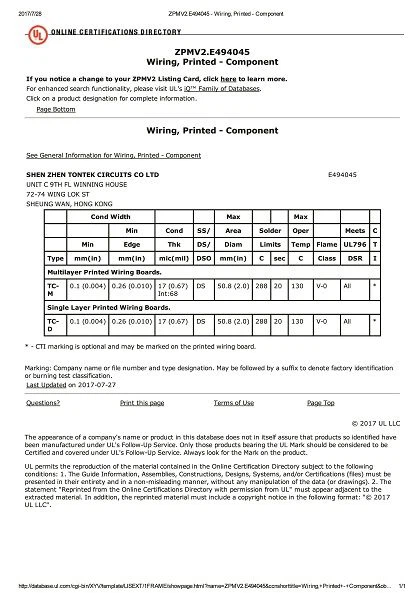
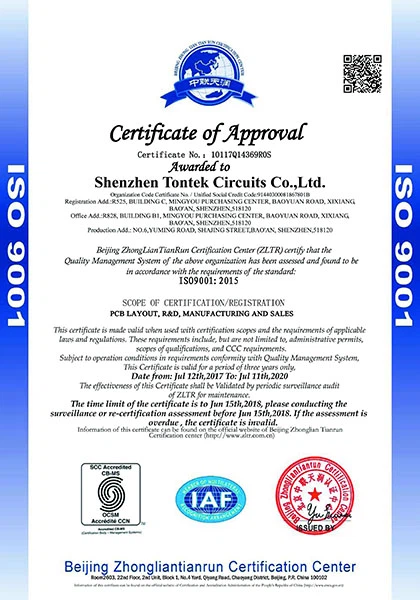
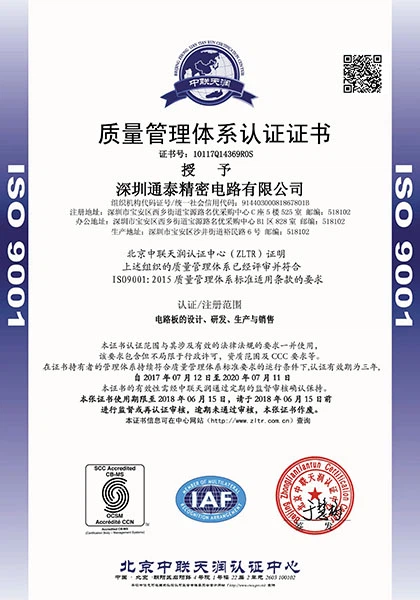
Certificate
Package & Delivery
Package: Standard export package or Custom
Delivery: By air express, by sea

FAQ
As one of the most professional rigid-flex pcb manufacturers and suppliers in China, we're featured by quality products and low price. Please rest assured to buy cheap rigid-flex pcb from our factory.
Book Type Structure Rigid Flex PCB, Multilayer Flexible Rigid Flex PCB, soft rigid combination board