

What is the difference between a Phased Array PCB and a traditional PCB?
In the realm of printed circuit boards (PCBs), the emergence of phased array PCBs has brought about a significant shift in technology and application. As a phased array PCB supplier, I am often asked about the differences between phased array PCBs and traditional PCBs. In this blog, I will delve into these differences to provide a comprehensive understanding of these two types of PCBs.
1. Design and Structure
Traditional PCBs are designed with a relatively straightforward layout. They typically consist of multiple layers of conductive copper traces separated by insulating dielectric materials. The design process mainly focuses on routing the electrical signals from one component to another in an efficient and space - saving manner. The traces are usually of uniform width and spacing, and the overall structure is optimized for general - purpose electronic devices such as consumer electronics, industrial control systems, and automotive electronics.
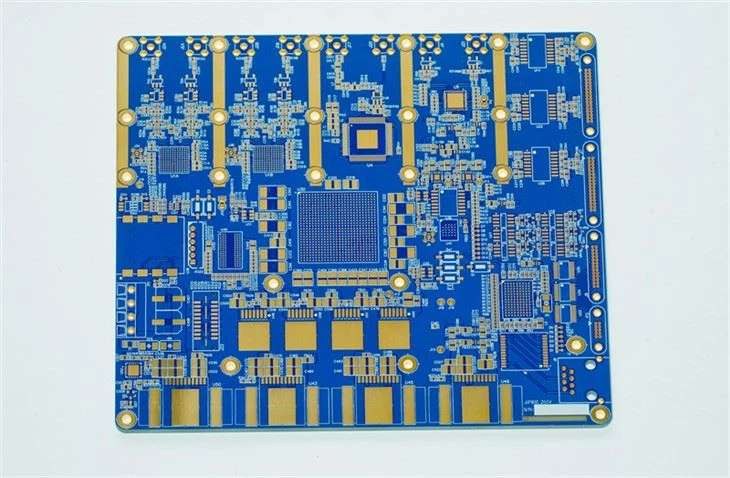
On the other hand, phased array PCBs have a much more complex design. They are specifically engineered for applications in phased array antenna systems, which are widely used in radar, satellite communication, and 5G base stations. The design of phased array PCBs needs to take into account factors such as signal phase control, beamforming, and electromagnetic interference (EMI) reduction. The traces on phased array PCBs are carefully designed to ensure that the signals transmitted or received by each antenna element have the correct phase and amplitude relationships. This often requires the use of specialized design techniques, such as microstrip lines, striplines, and impedance matching circuits.
2. Electrical Performance
One of the most significant differences between phased array PCBs and traditional PCBs lies in their electrical performance. Traditional PCBs are designed to meet the general electrical requirements of electronic devices, such as low resistance, low capacitance, and low inductance. They are suitable for applications where the signal frequency is relatively low and the requirements for signal integrity are not extremely high.
Phased array PCBs, however, need to operate at much higher frequencies, often in the microwave and millimeter - wave bands. At these high frequencies, the electrical properties of the PCB materials and the layout of the traces have a profound impact on the performance of the phased array antenna system. For example, the dielectric constant of the PCB material affects the phase velocity of the signals, and any variation in the dielectric constant can lead to phase errors in the antenna array. Therefore, phased array PCBs require materials with low loss tangent and stable dielectric constant over a wide frequency range.
In addition, phased array PCBs need to have excellent impedance matching characteristics to minimize signal reflection and maximize power transfer. This is crucial for ensuring the efficient operation of the phased array antenna system. Traditional PCBs may not require such high - precision impedance matching, as the signal frequencies and power levels are generally lower.
3. Manufacturing Process
The manufacturing process of traditional PCBs is well - established and relatively mature. It typically involves steps such as substrate preparation, copper deposition, photolithography, etching, and drilling. These processes are designed to produce PCBs with high reliability and low cost for mass production.
The manufacturing of phased array PCBs, on the other hand, is much more challenging. Due to the complex design and high - precision requirements, phased array PCBs need to be manufactured using advanced techniques and equipment. For example, the use of high - resolution photolithography is necessary to achieve the fine traces and small vias required for phased array PCBs. In addition, the manufacturing process needs to be carefully controlled to ensure the uniformity of the PCB materials and the accuracy of the trace dimensions.
Moreover, phased array PCBs often require special surface finishing processes to improve their electrical performance and corrosion resistance. For example, the use of immersion silver or electroless nickel immersion gold (ENIG) surface finishing can provide better electrical contact and solderability.
4. Material Requirements
Traditional PCBs can be made from a variety of materials, including FR - 4, which is a widely used epoxy - glass laminate. FR - 4 is cost - effective and has good mechanical and electrical properties for general - purpose applications. Other materials such as CEM - 1 and CEM - 3 are also used for low - cost and low - performance PCBs.
Phased array PCBs, however, demand high - performance materials that can meet the stringent requirements of high - frequency applications. Materials such as Flexible High Frequency PCB, PTFE Multilayer PCB, and High - Precision Hybrid Dielectric PCB are commonly used for phased array PCBs. These materials have low loss tangent, stable dielectric constant, and good thermal stability, which are essential for the proper functioning of phased array antenna systems.
5. Application Areas
Traditional PCBs are used in a wide range of applications, from simple consumer electronics like smartphones and tablets to complex industrial control systems and automotive electronics. They are the backbone of most electronic devices that we use in our daily lives.
Phased array PCBs, on the other hand, are mainly used in high - end applications that require advanced antenna technology. As mentioned earlier, they are widely used in radar systems for military and civilian applications, satellite communication systems for global coverage, and 5G base stations for high - speed wireless communication. The ability of phased array PCBs to control the phase and amplitude of the signals transmitted or received by the antenna elements allows for beamforming, which can improve the signal strength, directionality, and interference rejection of the antenna system.

Conclusion
In conclusion, phased array PCBs and traditional PCBs differ significantly in terms of design, electrical performance, manufacturing process, material requirements, and application areas. While traditional PCBs are suitable for general - purpose electronic devices, phased array PCBs are specifically designed for high - frequency and high - performance applications.
As a phased array PCB supplier, we understand the unique requirements of our customers in various industries. We are committed to providing high - quality phased array PCBs that meet the most demanding specifications. If you are interested in purchasing phased array PCBs or have any questions about our products, please feel free to contact us for a detailed discussion and procurement negotiation.
References
- "Printed Circuit Board Design: Principles and Practices" by Douglas Brooks
- "Antenna Theory: Analysis and Design" by Constantine A. Balanis
- Industry whitepapers on phased array technology and PCB manufacturing